
DACHS-7 - The Iron Dachshund
When the early settlers of Veltraxis discovered Veltrium, they faced an immediate problem. The cave networks were a labyrinth of narrow, gas-filled tunnels that heavy machinery cannot navigate. Veltrium emits almost no readable signal. And the passages where it grows are often no wider than a large dog.
The answer was DACHS-7.
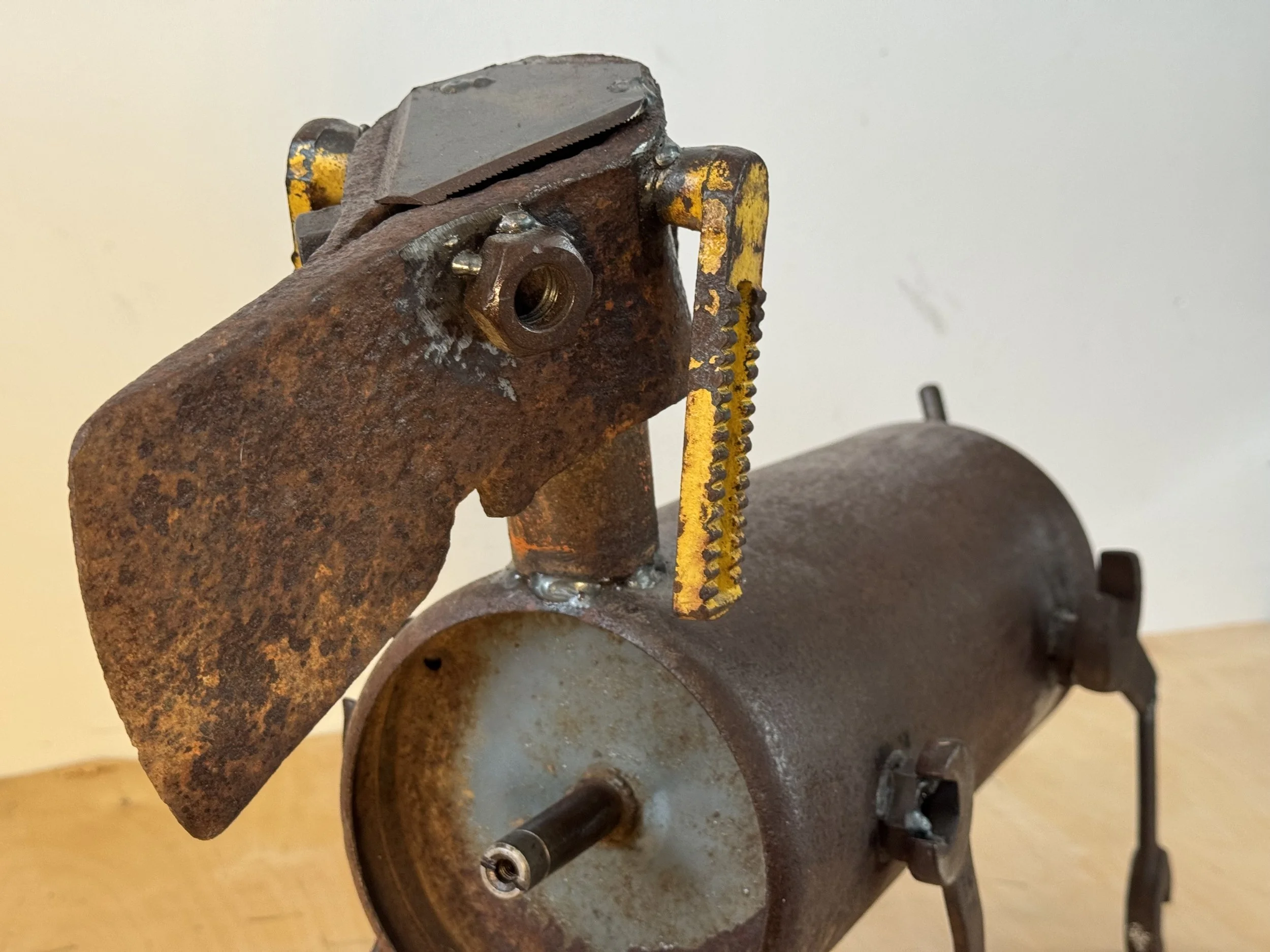
Cobbled together from mining salvage and repurposed machine parts, DACHS-7 was never pretty. It was never meant to be. It was built to go where nothing else could — long, lean, and relentless.
Unit Classification: Subterranean Detection Scout
Designation: K-9 / DACHS Series, Unit 7
Planet: Veltraxis
Built By: Settlers of Veltraxis — likely salvaged and assembled by the first mining factions to settle Veltraxis
Year: 3084
Dimensions: 60 × 40 × 20 cm (23.6 × 15.7 × 7.9 in)
Price: 1499 EUR
The Veltrium Sense
Veltrium emits an almost undetectable chemical signature as it grows — a trace compound somewhere between sulphur and ozone, far below what any standard instrument can register. DACHS-7's sensor array was engineered specifically around this signature. It can detect a Veltrium cluster through thirty metres of solid rock.
No other unit — human or machine — comes close.
The Iron Dachshund moves through a cave the way water moves through stone: finding the path of least resistance, following the scent, never stopping. When it locates a Veltrium formation it locks position, broadcasts a low pulse signal, and waits. The excavation rigs do the rest.
Anatomy & Construction
Body — Lawnmower Roller
The core chassis is a salvaged lawn-roller drum, elongated and hollow. Its cylindrical shape is ideal for squeezing through the pinched rock passages of Veltraxis's cave systems. Lightweight for its size, it holds the unit's sensor core and power cell inside its iron belly.
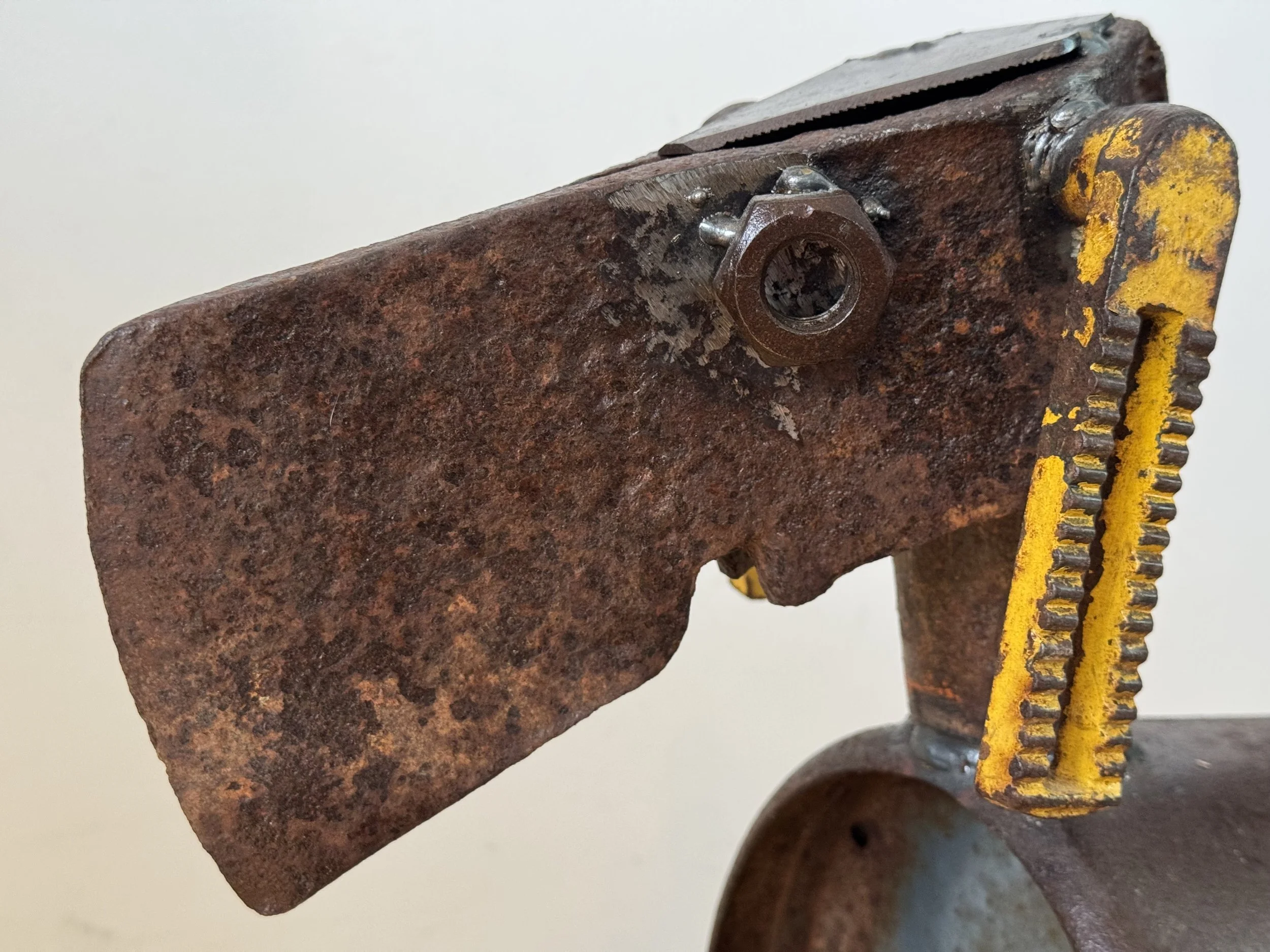
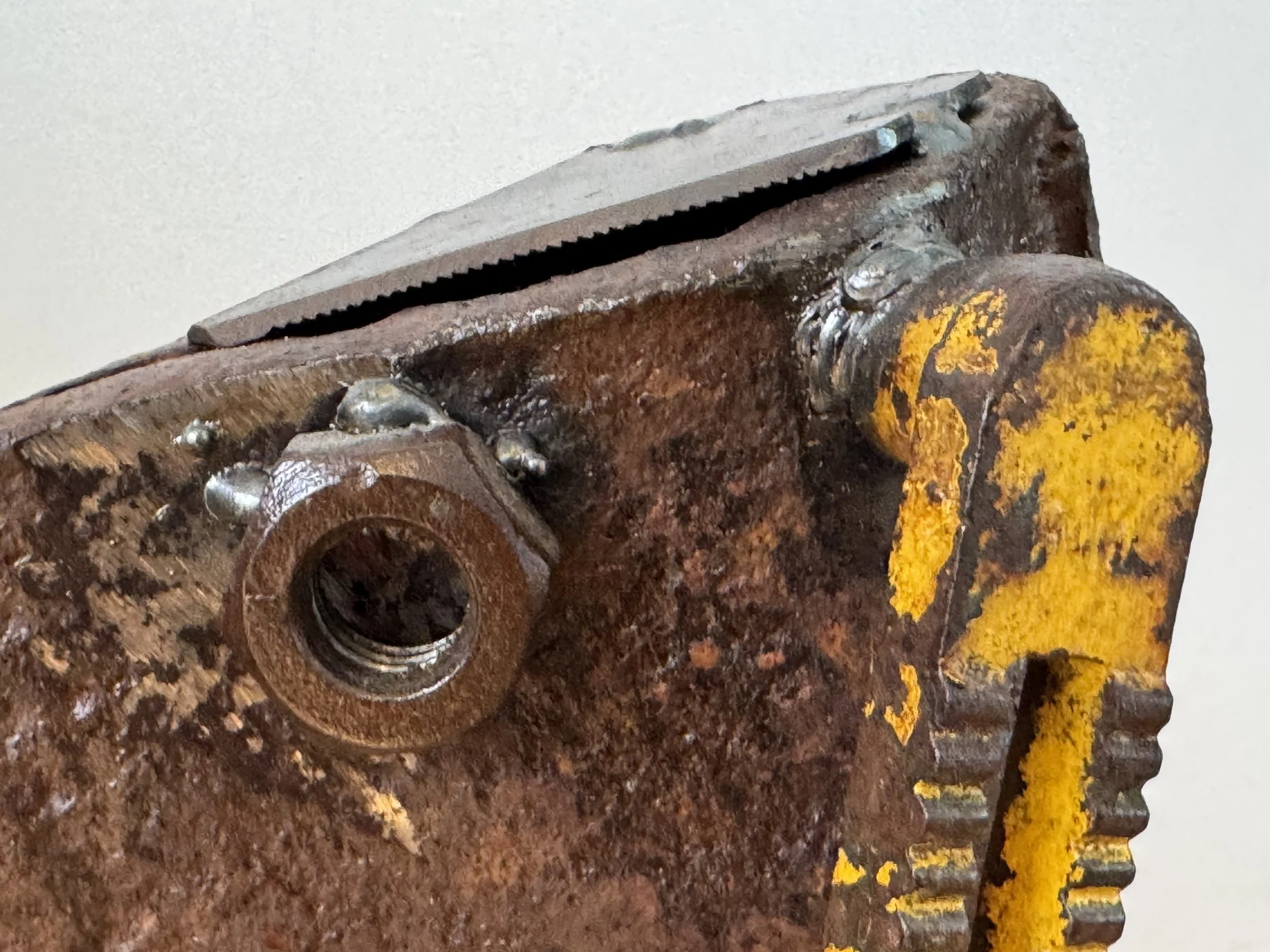
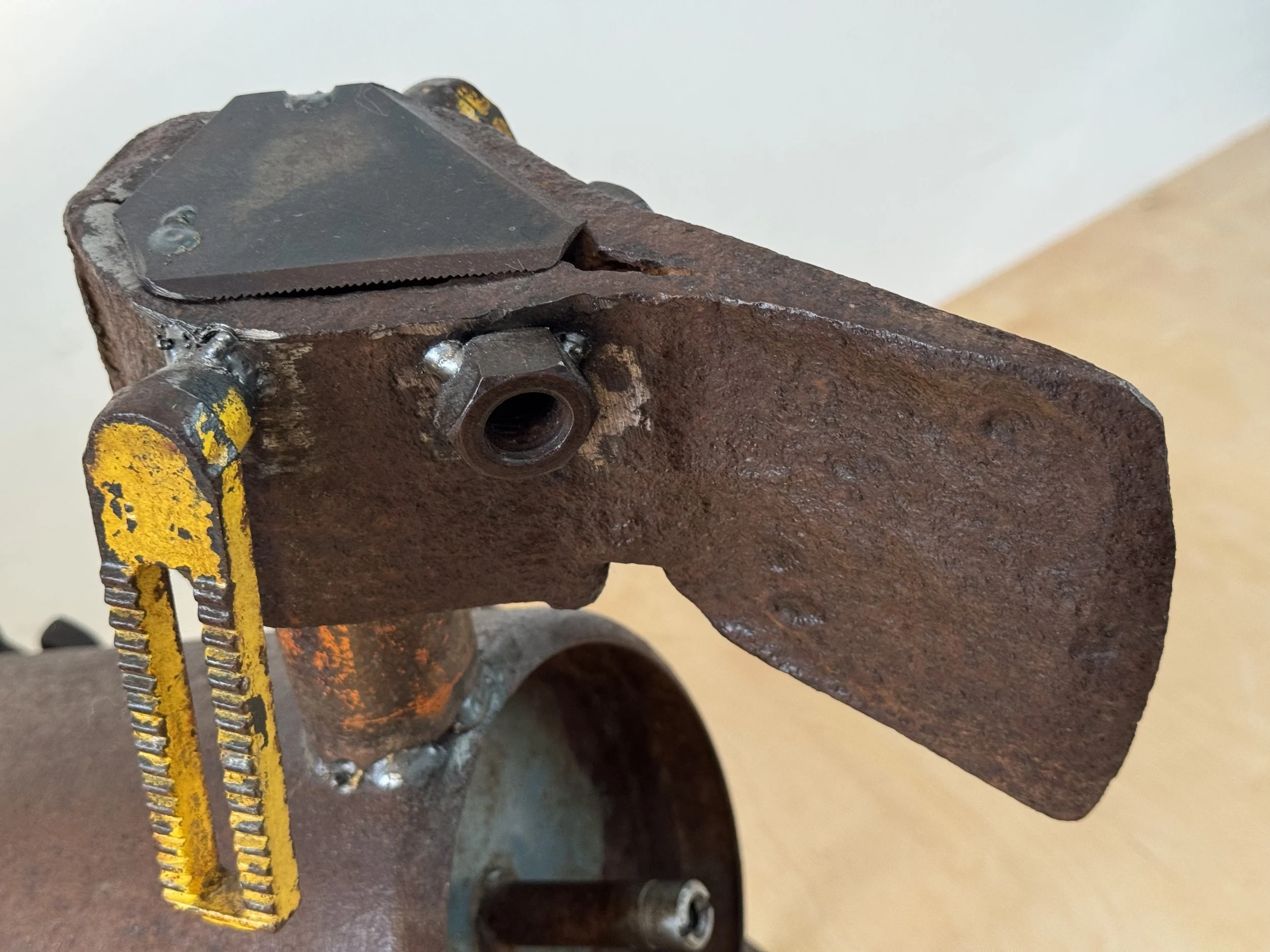
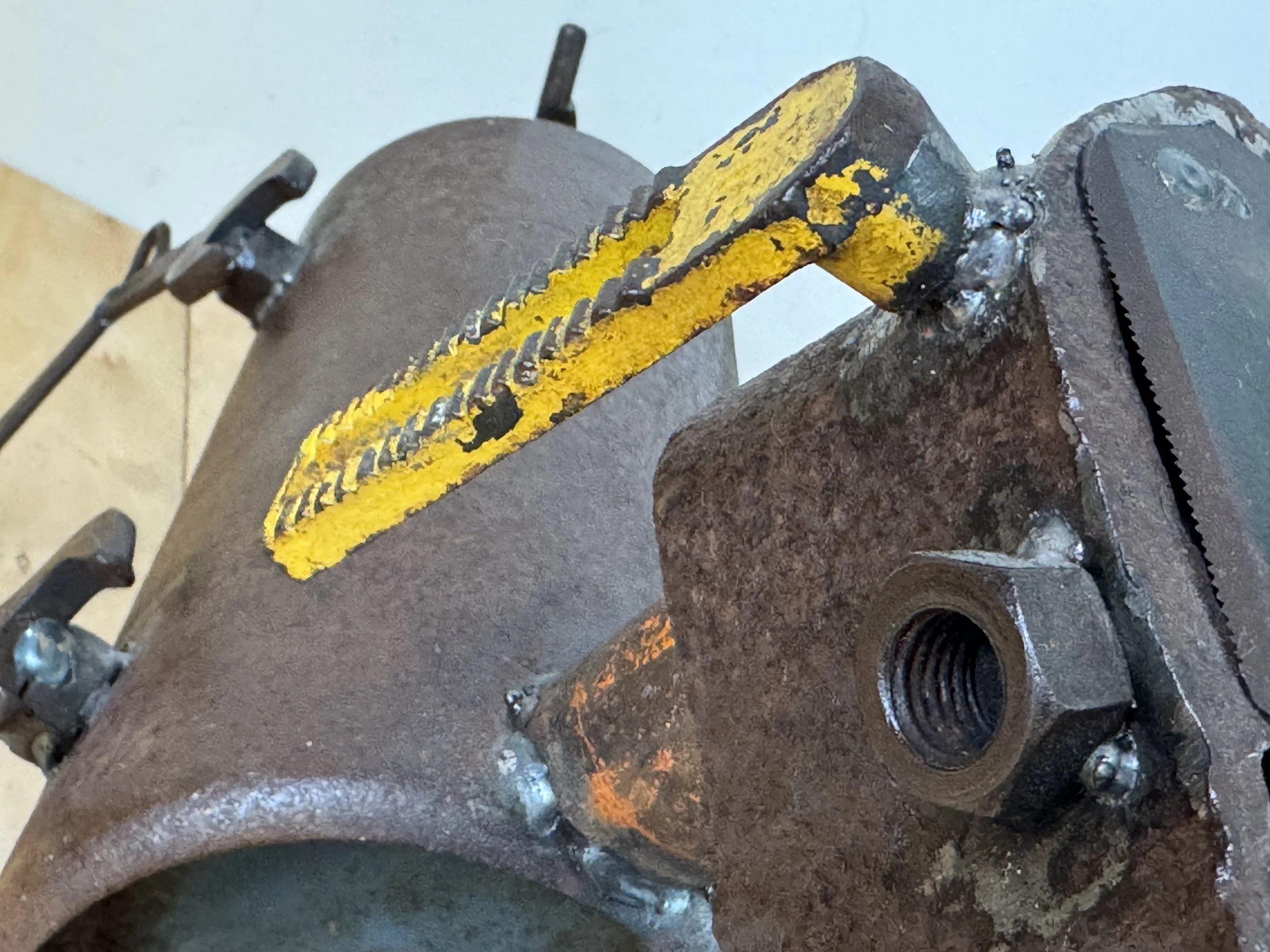
Head — Old Axe Head
The skull is a worn axe-head, mounted sideways so the blade faces forward. It doubles as a wedge — DACHS-7 can force its head into hairline cracks in rock to test whether a tunnel is passable. The dense iron also shields the sensitive olfactory array housed just behind it.
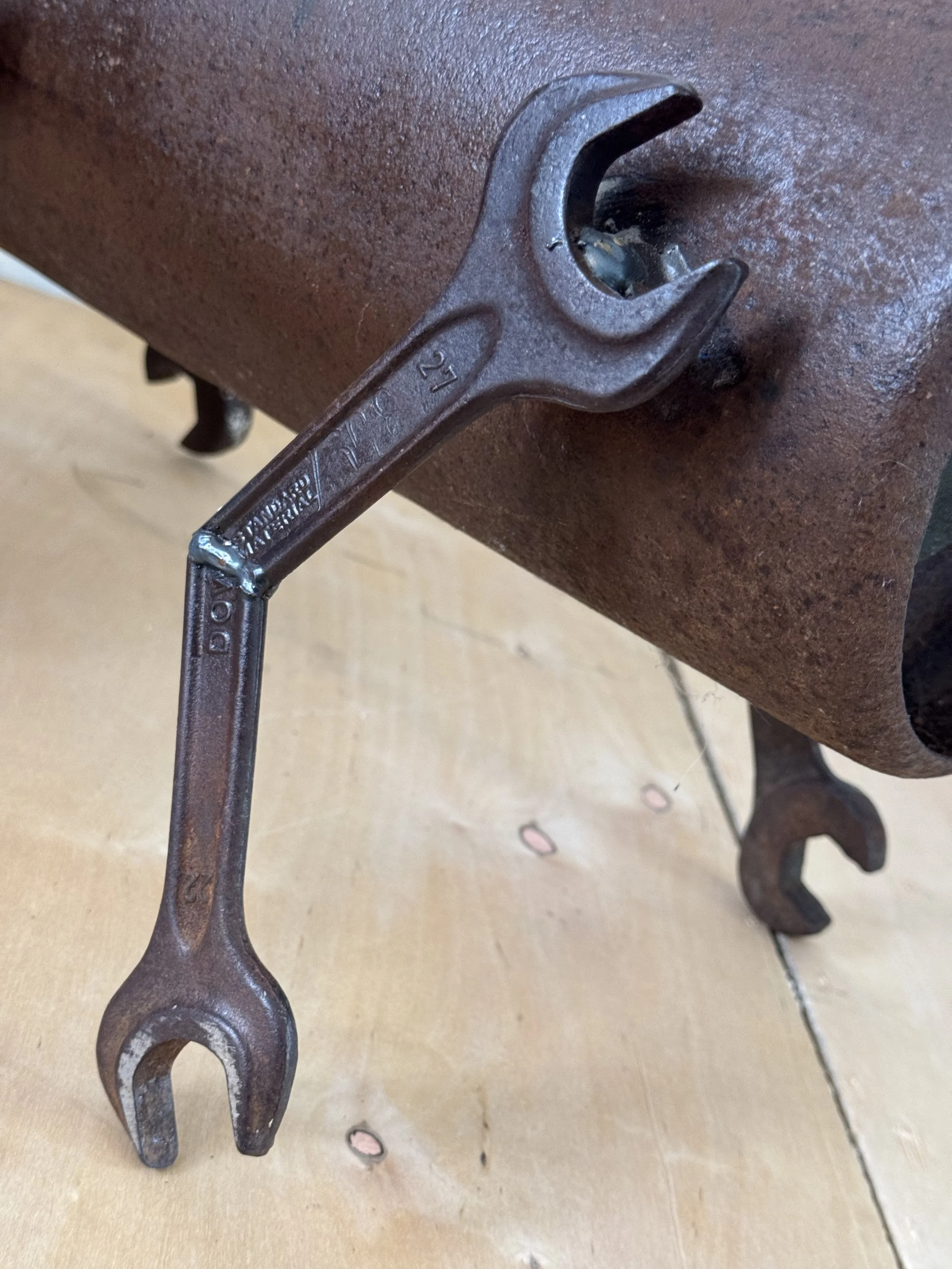
Legs — Wrenches
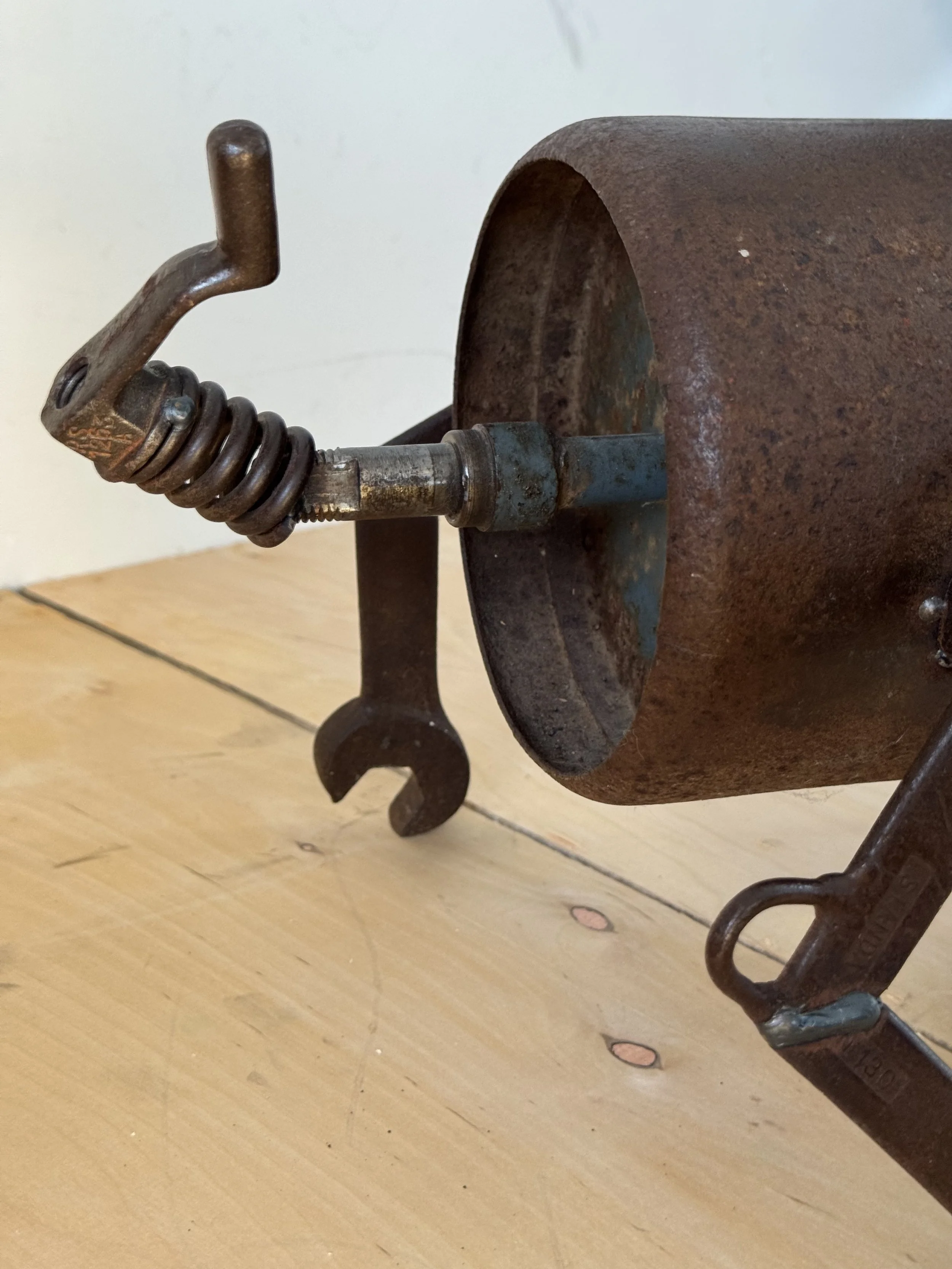
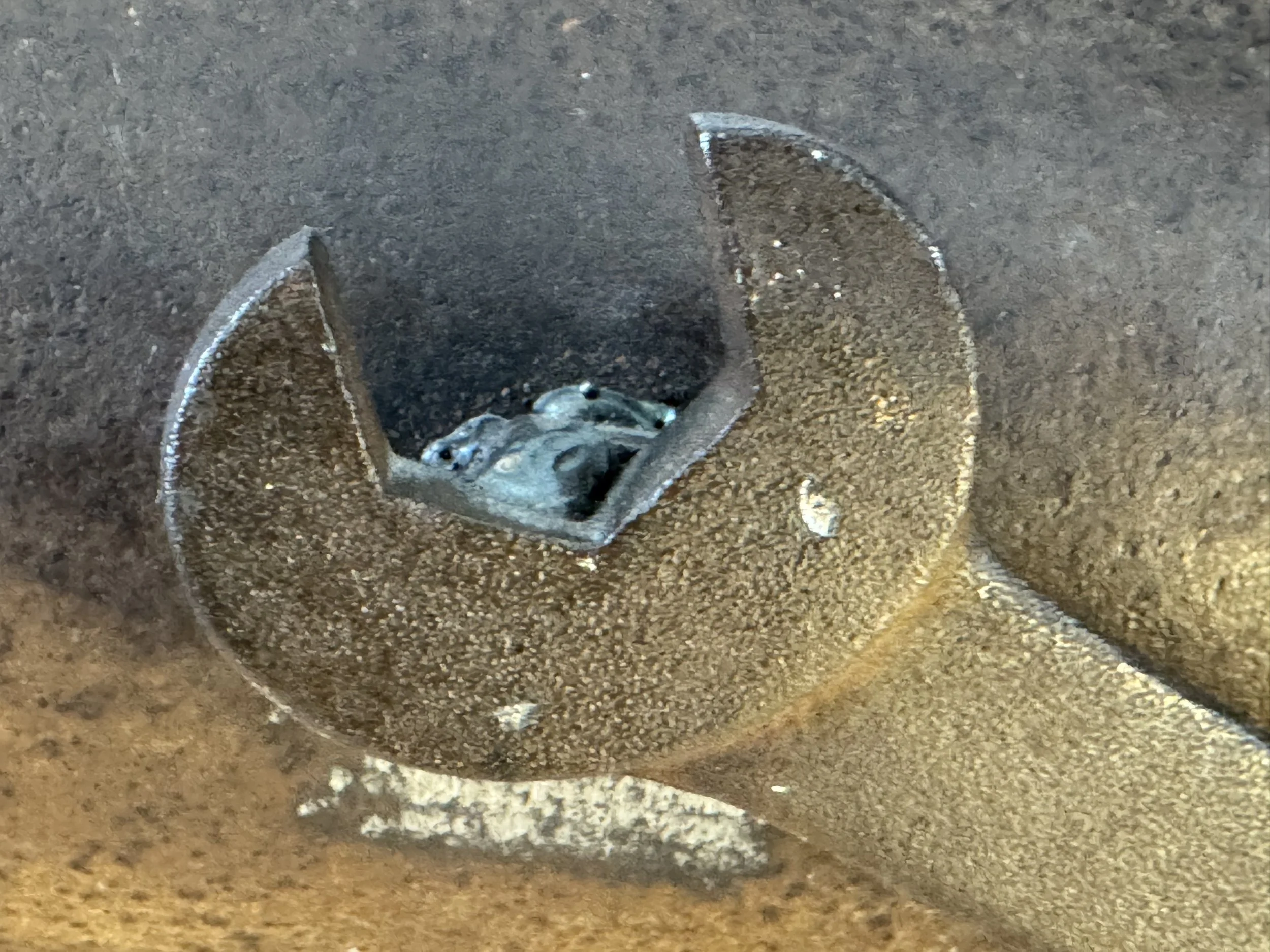
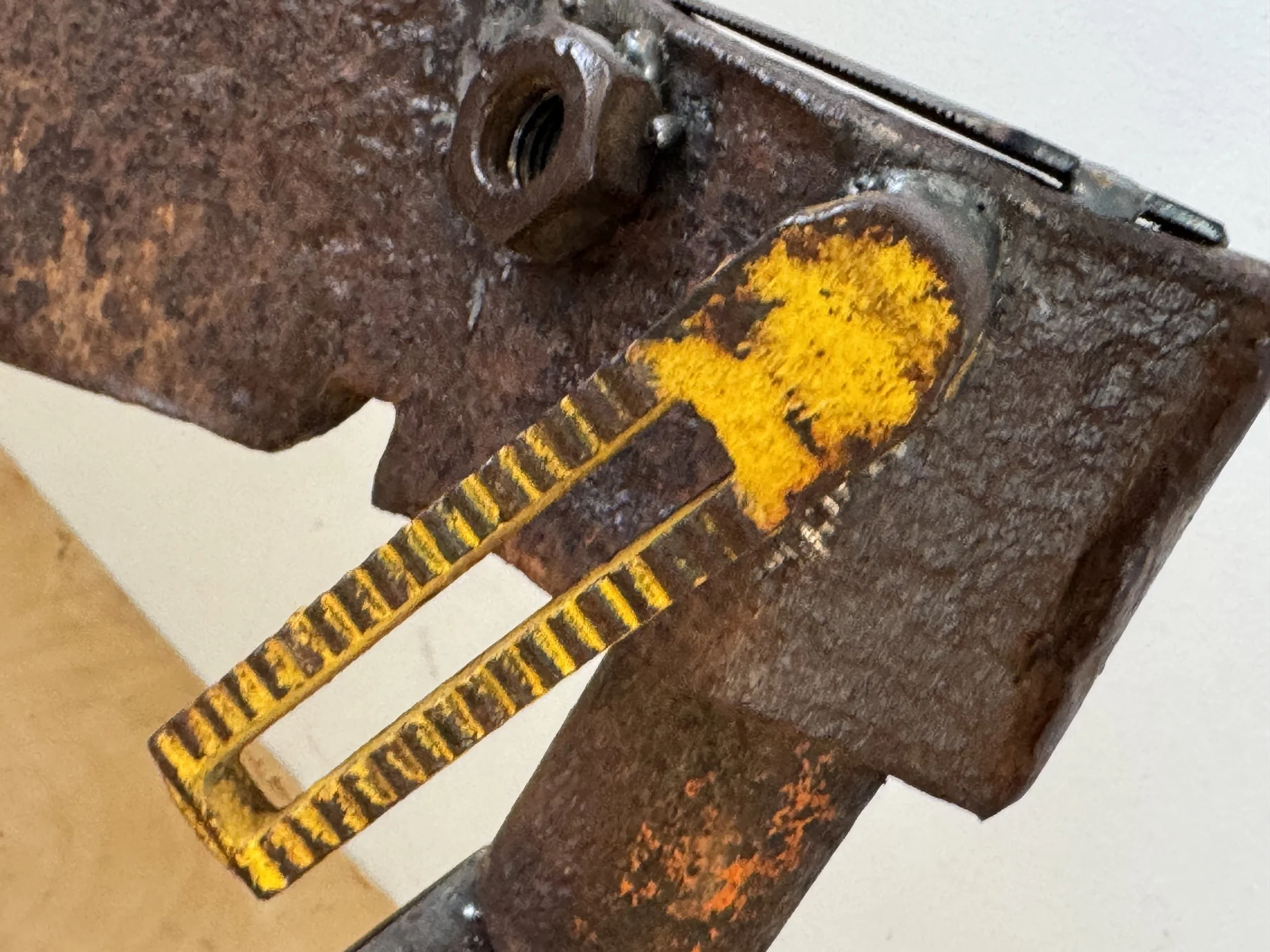
Four heavy wrench-shafts serve as limbs, jointed at the jaw of each wrench. They grip irregular rock surfaces with extraordinary purchase. On wet cave floors, the open-end heads dig in like cleats. Clumsy on flat ground. Unstoppable underground.
Tail — Coil Spring
A thick coil spring trails behind, acting as a counterbalance and shock absorber when DACHS-7 descends steep drops. It also transmits vibration data — the spring resonates with low-frequency sound waves in the cave walls, feeding seismic readings back to the sensor core.
Ears — Lawnmower Blade Panels
Two flat, angled blade-panels sit atop the axe-head. They rotate independently to triangulate sound and chemical signatures, functioning as directional amplifiers for the olfactory sensor array beneath.
Field Notes — Crew Testimony
“It doesn’t move like a machine. It moves like something that’s been underground its whole life. Like it belongs there.”
“We lost three drilling rigs in the Narrows before someone sent DACHS-7 in. It found four Veltrium clusters in six hours.”
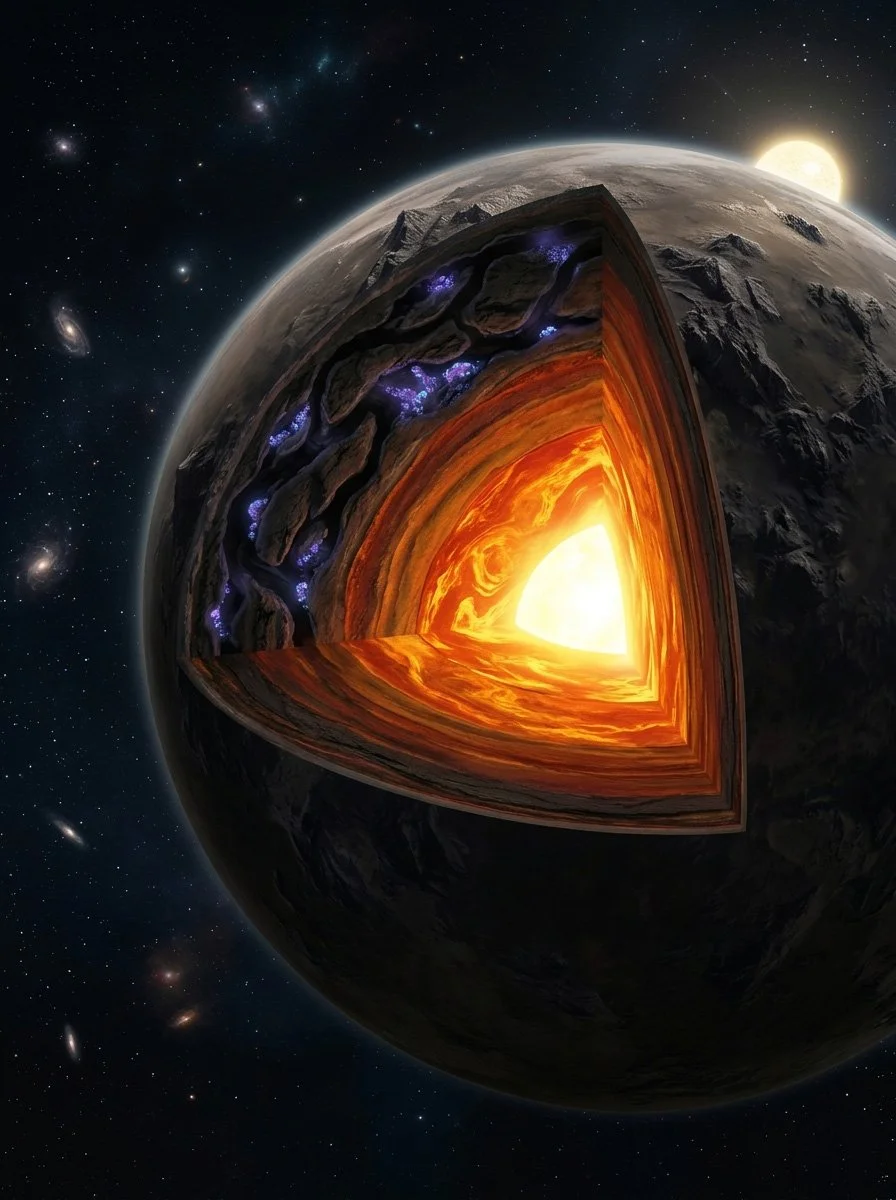
Veltraxis is a dense, geologically ancient world with a thin atmosphere and almost no natural surface light. Its crust is riddled with pressurised cave systems carved over billions of years by underground rivers that have long since dried up. The caves are silent, pitch dark, and laced with toxic gas pockets. Nothing lives on the surface. Everything of value is below it.
Deep in the narrowest passages of these cave systems, Veltrium grows — an extraordinarily rare metal that forms in slow fungal-like clusters, invisible to the human eye in its raw state, and nearly undetectable by standard instruments. It is the most valuable material known to the mining factions, and it only exists in places no conventional machine can reach.
Planet Veltraxis
Status
DACHS-7 is the only unit of its series still operational. DACHS-1 through DACHS-6 were lost to cave-ins, magma vents, or simply never returned from the deep tunnels. Whether they found something down there, or were simply swallowed by the planet, no one knows.
Today, DACHS-7 has been decommissioned and pulled from active duty. It is the last surviving unit of its kind. It now exists as a collector's artifact, sought after not for what it can do, but for what it survived. A machine built from scrap that outlasted everything sent alongside it. The Iron Dachshund no longer hunts. But it endures.